ValuJet Flight 592 departed Miami International Airport on the afternoon of May 11, 1996.
Within minutes, the first officer contacted the Miami tower and requested a return to the airport.
“Fire in the cabin” were the chilling words that air traffic controllers heard. Smoke had entered the cockpit, and with the airplane at full throttle and the pilots possibly overcome by smoke, it spiraled into the Florida Everglades at 500 mph.
Carlos Castillo was the Incident Commander with Miami-Dade Fire Rescue at the time of the crash. He said he remembers listening to the rescue helicopter radio transmission while he was on the way to the scene miles to the west of Miami.
“There is zero probability of survivors.”
“I heard air rescue fly over and they said, ‘There is zero probability of survivors,'” Castillo said. “I remember thinking, ‘How can they tell as soon as they arrived?'”
The passenger jet brought down by improperly shipped chemical oxygen canisters, which caught fire in the cargo hold. The 2,000-degree heat burned through the electrical system and melted the DC-9’s control cables.
Initial responders were baffled.
A DC-9 – passengers and crew – 110 souls just seemed to disappear in the sawgrass.
Danny Ilano, a then Miami-Dade police diver, was struck by what he did not seer at the crash site.
“You figure you’d see a plane, but you didn’t see anything,” he said.
Miami Herald / Getty Images / Miami Herald/INACTIVE
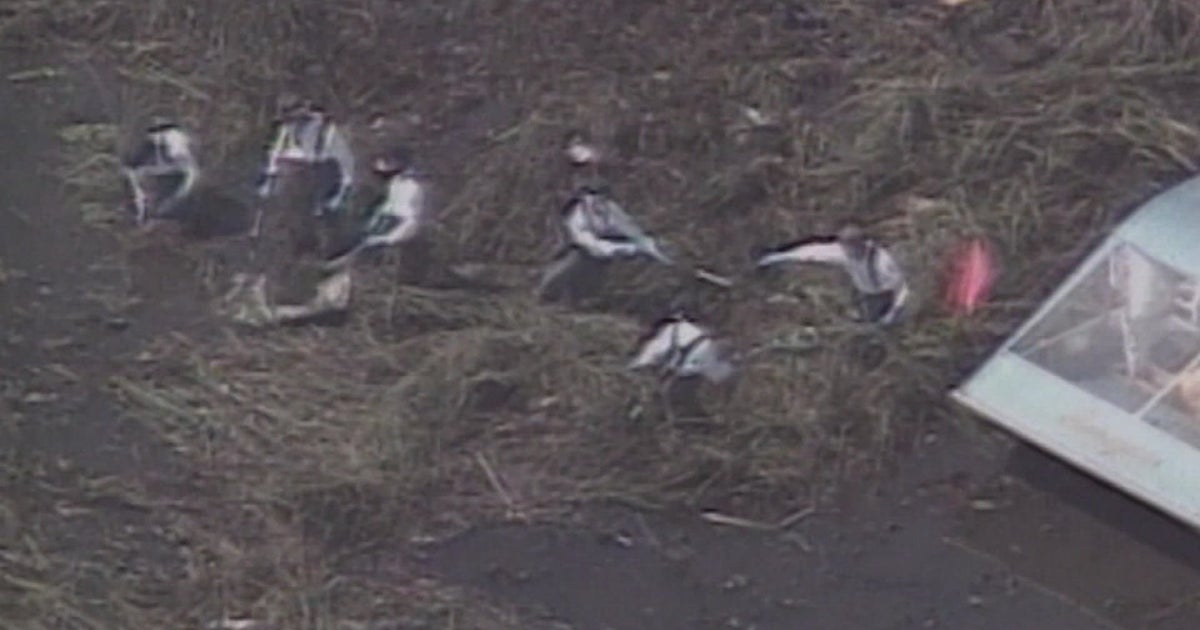
Shattered metal, engine parts, fuel, human remains – a toxic soup in 4-6 feet of Everglades mud and water confronted Miami-Dade police divers.
They suited up and waded in.
It was a month-long struggle. Hot, humid and exhausting – a heroic effort backed up by Miami-Dade Fire Rescue and a host of federal agencies.
Paul Toy, a Miami-Dade police officer, and a diver found the impact point in the sandstone beneath the sawgrass.
There was no wreckage at the point of impact.
“If you take a big, glass vase to a 10-story building, throw it over, and it hits the ground, it shatters completely and that’s exactly what the plane di,” Toy said.
The Miami-Dade Medical Examiner, Dr. Roger Mittleman, informed loved ones and family members that, “Obviously there can’t be full bodies due to the force of impact.”
Pool / Getty Images 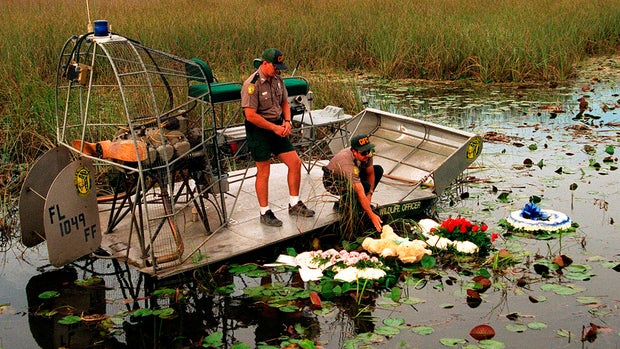
Divers were using fish nets to bring up debris and body parts, which then had to be identified.
There were personal items scattered at the crash site.
“They found a teddy bear,” Llano remembered. “That brought things home because it was so sad.”
Miami-Dade Fire Rescue, along with ValuJet employees, were tasked with communicating with the victim’s families.
“They could not wrap their heads around it,” remembers Willie Alvarez, who was then the Miami-Dade Fire Rescue Deputy Director who made a bold suggestion.
Relatives of ValuJet victims were taken to crash site in Florida Everglades
Alvarez suggested to bring relatives, loved ones to the crash scene in the middle of the Florida Everglades.
That’s exactly what happened.
The grieving families were bussed along a levee road near the crash site, a compassionate move by the responders.
CBS News Miami’s Hank Tester asked Alvarez if the families were on the mind of the divers and investigators.
“Always,” he responded. “Everyone did, yeah.”
“That drove you?” Tester asked.
CHRIS BERNACCHI/AFP via Getty Images 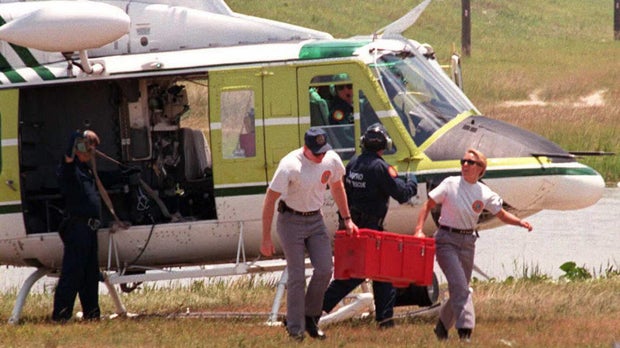
“Oh yeah,” Alvarez responded with tears in his eyes.
Toy remembered hearing from the owners of the air boat used in the search.
“If it happens to me, I’d want somebody looking and doing their best to find me,” Toy said.
In the end, after a monthslong investigation and diligent forensic work, partial remains of 70 of the 110 victims were identified and returned to family members who, to this day, carry the pain of that day in 1996.