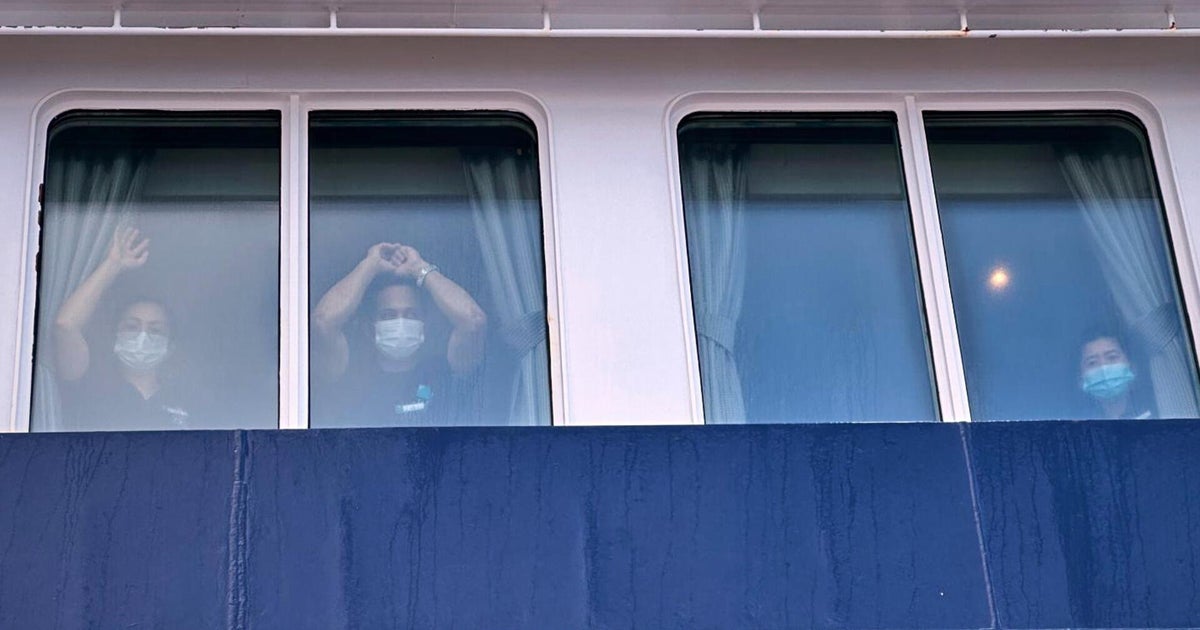
Federal health officials are expected to provide an update Monday after 17 American citizens connected to a hantavirus outbreak aboard the MV Hondius cruise ship are on their way back to the United States for monitoring and medical assessment.
This comes as CBS is learning that one American evacuated from the cruise ship began showing hantavirus symptoms, and another tested “mildly” PCR positive for Andes virus after arriving on a repatriation flight, according to the Department of Health and Human Services.
According to the HHS, the passengers were transported Sunday night through a coordinated repatriation effort involving the U.S. State Department, the Centers for Disease Control and Prevention and the Administration for Strategic Preparedness and Response.
Officials said the passengers are being flown to the University of Nebraska Medical Center and Nebraska Medicine in Omaha, one of the nation’s Regional Emerging Special Pathogen Treatment Centers.
“HHS through ASPR and CDC is supporting State Department in the repatriation of 17 American citizens from the MV Hondius cruise ship affected by the Andes variant of hantavirus,” HHS said in a statement posted to X.
Federal officials said two passengers were transported in the aircraft’s biocontainment units “out of an abundance of caution.” Officials also confirmed one passenger currently has mild symptoms, while another tested mildly PCR positive for the Andes virus.
Upon arrival, officials said each passenger would undergo clinical assessment and receive care based on their condition.
A media briefing featuring HHS officials, CDC experts and University of Nebraska Medical Center specialists is scheduled for Monday morning in Omaha.
Among those expected to attend are:
- Admiral Brian Christine, assistant secretary for health and head of the United States Public Health Service
- Brendan Jackson, acting director of the CDC’s Division of High-Consequence Pathogens and Pathology
- John Knox, principal deputy assistant secretary for the Administration for Strategic Preparedness and Response
The outbreak has drawn attention in Georgia after health officials confirmed that two Georgia residents were being monitored following possible exposure connected to the cruise ship.
Earlier reporting from CBS News Atlanta found that Georgia health officials were monitoring two state residents connected to the outbreak.
Separately, reporting from WTOC identified a Brunswick-area woman who had been aboard the MV Hondius around the time of the outbreak.
The Andes strain of hantavirus is considered rare and has historically been associated with outbreaks in South America. According to the CDC, hantaviruses are typically spread through contact with infected rodents or their droppings, though the Andes strain is one of the few variants where person-to-person transmission has been documented in limited cases.
Health officials in Georgia and South Carolina have previously emphasized that they believe the virus does not spread easily under normal circumstances.
The CDC describes hantavirus infections as potentially severe illnesses that can initially resemble the flu, with symptoms including fever, muscle aches, fatigue and shortness of breath. Severe cases can develop into hantavirus pulmonary syndrome, a potentially life-threatening respiratory illness.
Federal officials said Monday’s briefing will provide additional details on the passengers’ conditions and the government’s ongoing response.