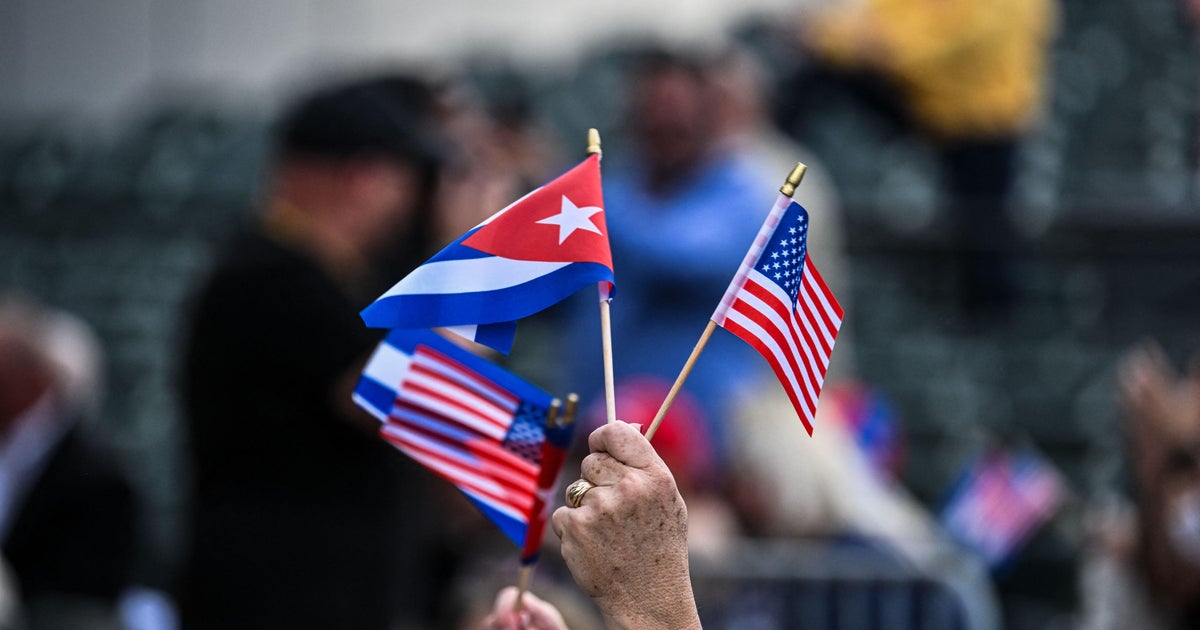
Prolonged blackouts in Havana and across Cuba have led to protests as the government warned citizens that it is mostly out of fuel to run the power grid.
The mounting crisis prompted Cuba’s president to signal the country would consider accepting a $100 million aid package from the United States, though details have yet to be worked out.
The news emerged following the government’s confirmation that it hosted a U.S. delegation that included CIA Director John Ratcliffe.
A CIA official told CBS News that Ratcliffe discussed with Cuban officials “intelligence cooperation, economic stability, and security issues, all against the backdrop that Cuba can no longer be a safe haven for adversaries in the Western Hemisphere.”
The Cuban government blames the lack of fuel on U.S. restrictions on oil imports, which it says are part of former President Donald Trump’s pressure campaign on the Cuban regime.
The U.S. strategy has divided opinions in South Florida.
“They should squeeze [the regime] more until Cuba changes,” said Mario Cabera, a patron of Versailles restaurant in Miami’s Little Havana.
But others, like Carlos Horan, disagreed with the tactic. “What are they going to do if they can’t get fuel? I’m totally against the Cuban regime, but what the U.S. is doing is the wrong thing,” Horan said.
On top of existing shortages of food and medicine, experts say oil is not the only problem: the nation’s power grid is falling apart.
“It’s going to get to the point where there’s no electricity in Cuba,” said Andy Gomez, a professor of Cuba studies at the University of Miami.
Gomez suggested the dire situation may be forcing difficult choices within the government. “I think this is the worst. I have to believe there are conversations going on within the inner circle, ‘we have no choice'”. However, he cautioned that regime change remains difficult as long as military support for the Cuban government is intact.