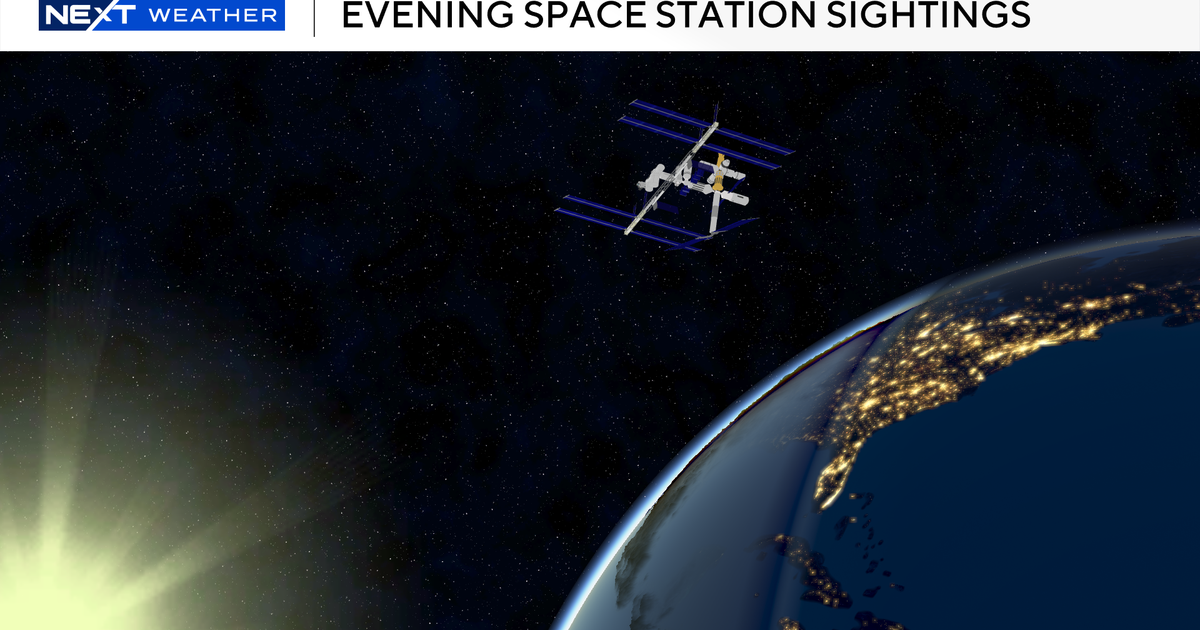
If you’ve been outside the last night or two and noticed a star moving suspiciously fast, congratulations, you just saw the International Space Station (ISS) cruising above Miami.
If you missed it, don’t worry — there are a few more chances, and the viewing may only get better.
The ISS is always there, but what makes it put on a great show this time comes down to geometry, timing and our lazy winter Sun.
The Sun is about as low as it can go this time of year, and the International Space Station loves being in the spotlight. We’re losing sunlight by 5:30 p.m., but at 250 miles above us here in South Florida, there is still plenty of it. What that means is that while we go dark, the ISS doesn’t. This gives us a great view of the station as it cruises by at 17,500 mph.
The low sun also means Earth’s shadow tilts upward relative to Florida. The ISS can stay above that for longer, as long as it stays lit, we can see it racing across the sky.
The station’s orbit is tilted 51.6 degrees, which means it swings north and south as it laps the Earth every 90 minutes. This tilt allows it to pass right over the southeast, sometimes even directly over Miami. This orbit means that you will see it either moving from northwest to southeast or southwest to northeast. All you need to know is when and where to look.
If you want to spot the ISS and give it a wave, you have three more chances through the rest of the week.
On Wednesday at 6:42 p.m., look west — the station will be moving from north to south and will be easy to spot.
The main event is Thursday at 5:54 p.m., where it will go almost directly overhead and be hard to miss. It will appear from just west of north, nudge slightly east, and it flies over us to the south.
Finally, Saturday at 5:56 p.m., you will need to find a nice, clear, open area, as it will be passing low in the western sky from right to left relative to us here.
Make sure you are in place at those times when the visibility starts. As we said before, at 17,500 mph, it will only be above our sky for 3-6 minutes.