After a ruling last week allowed Florida to begin enforcing a 2024 law designed to prevent children from having access to certain social media sites, tech industry groups Wednesday asked a federal appeals court to quickly hear arguments about whether the law violates First Amendment rights.
The groups NetChoice and the Computer & Communications Industry Association filed a motion requesting that the 11th U.S. Circuit Court of Appeals “expedite” oral arguments and a decision on the constitutional issue.
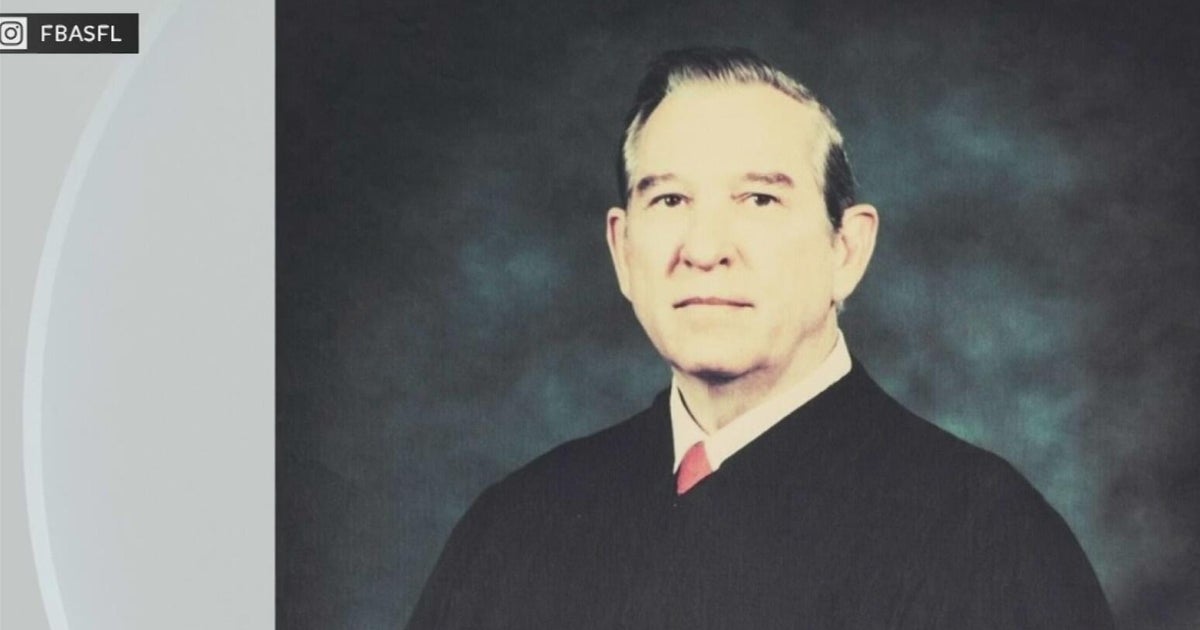
U.S. District Judge Mark Walker in June issued a preliminary injunction to block the law (HB 3), agreeing with the industry groups that it likely violated the First Amendment. The state appealed Walker’s decision, and a panel of the Atlanta-based appeals court last week approved a stay of the preliminary injunction.
Florida can temporarily enforce law preventing children from accessing social media
The stay effectively allowed the state to begin enforcing the law while the underlying appeal of Walker’s decision continues to play out. Wednesday’s motion seeks to speed up consideration of that underlying appeal.
“Florida House Bill 3 is the latest attempt in a long line of government efforts to restrict new forms of constitutionally protected expression based on concerns about their potential effects on minors,” the motion said. “This constitutional challenge to its restrictions accordingly raises exceptionally important issues about the First Amendment rights of … Computer & Communications Industry Association and NetChoice members to communicate with their users and the First Amendment rights of those users to access some of the most popular online services operated. Those rights are under threat of immediate harm because the injunction (the industry groups) had obtained to prevent HB 3’s enforcement and to safeguard members’ and their users’ constitutional rights is now stayed.”
After last week’s ruling, Attorney General James Uthmeier quickly posted on X that “HB 3 is now the law of the state and will be enforced.” A separate legal battle had already been pending about an attempt by Uthmeier to enforce the law against the operator of Snapchat.
The law prevents children under age 14 from opening accounts on certain platforms — which court documents indicate could include platforms such as Snapchat, Instagram, Facebook and YouTube. Parents would have to give consent for 14- and 15-year-olds to have accounts on the platforms.
The law did not name platforms that would be affected. But it includes criteria such as whether platforms’ features include infinite scroll and autoplay.
Supporters of the law, one of the biggest issues of the 2024 legislative session, contend that the targeted platforms have addictive features that harm children’s mental health. The three-judge panel of the appellate court was sharply divided last week about imposing the stay on the preliminary injunction.
“Rather than blocking children from accessing social media altogether, HB 3 simply prevents them from creating accounts on platforms that employ addictive features,” Judge Elizabeth Branch wrote in the 26-page majority opinion joined by Judge Barbara Lagoa. “And even among such platforms, the law narrows its focus to those that have evidenced significant usage by children and young teens. The district court (Walker) erred in holding otherwise.”
But Judge Robin Rosenbaum, in a 29-page dissent, called the law “plainly unconstitutional on its face” and said it also will affect adults, who will be subject to age verification to have accounts on the targeted platforms.
“As it’s written, the act purports to regulate the speech of everyone who uses the covered social media websites,” Rosenbaum wrote. “For minors, it acts as a categorical ban on speech (and access to speech) on covered social media platforms. And it forces the platform to demand identifying information from all users, including adults. In doing so, it chills countless users’ speech on deeply personal, political, religious and familial matters — reaching the heart of what the First Amendment was designed to protect in the first place.”
In the motion filed Wednesday, attorneys for the industry groups said the state in October requested expedited arguments on the preliminary injunction. The court did not take action on the request, which the industry groups did not oppose.
“Expedition is therefore now more important than ever because all parties need clarity as to the ultimate enforceability of HB 3,” the motion said. “And the acute and irreparable harms that will be caused by uncertainty over HB 3’s enforceability reinforce the good cause for expediting review of the merits of the district court’s opinion.”