As the summer heat simmers down and the Atlantic hurricane season comes to a close, locals and tourists alike are heading to South Florida’s beaches in droves. But there is an oddly shaped hazard that many beachgoers may not be aware of.
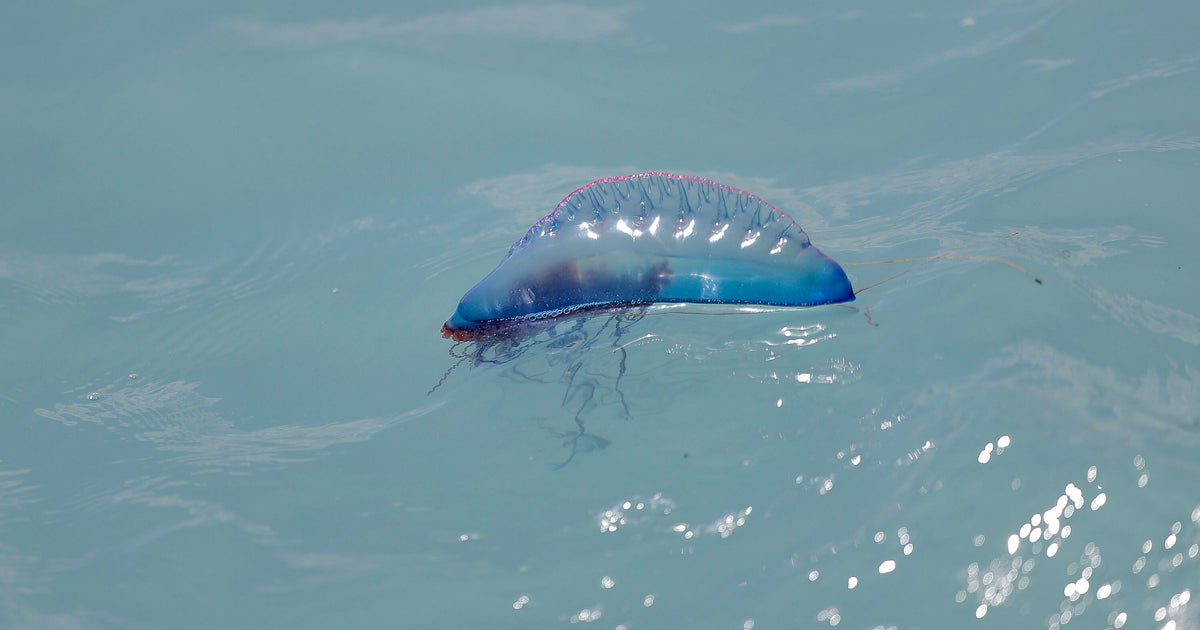
On the beaches of South Florida, it’s not unusual to see an object that may look like a harmless blue plastic bag, but don’t pick it up unless you want to get hurt. That blue “plastic bag” is most likely a Portuguese man o’ war.
According to the Palm Beach County Parks & Recreation Department, Portuguese man o’ wars are predominantly present from November through April due to strong easterly winds that carry them close to shore.
Here’s everything you need to know about Portuguese man o’ wars and what you need to do if you ever get stung.
Not a jellyfish, but just as dangerous
Contrary to popular belief, the Portuguese man o’ war is not a species of jellyfish but rather a siphonophore: an animal closely related to jellies.
According to the National Oceanic and Atmospheric Association (NOAA), siphonophores are organisms comprised of a colony of specialized, genetically identical individuals called zooids — or “clones” — with various forms and functions that work together as one. Portuguese man o’ wars, in particular, are made up of four zooids called polyps, each responsible for a different purpose.
The Portuguese man o’ war gets its name from the uppermost polyp, a gas-filled bladder called a pneumatophore. This is the creature’s most recognizable feature, which sits above the water’s surface and resembles the 18th-century warships of the same name. According to National Geographic, Portuguese man o’ wars are also known as “bluebottles” due to the pneumatophore’s purple-blue color.
The second polyp comprises the man o’ war’s tentacles. These long, thin tendrils average about 30 feet in length but can extend up to 165 feet below the sea surface, NatGeo said.
The tentacles are the most dangerous part of the creature because they are covered in venom-filled cells called nematocysts, which are used to paralyze and kill fish and other small creatures. However, the Portuguese man o’ war’s sting is still excruciatingly painful but rarely deadly. NatGeo said that people should still be cautious around them because even dead man o’ wars washed up on shore can still sting.
Muscles in the tentacles draw up prey to the third polyp, which contains digestive organisms, while the fourth polyp contains reproductive organisms.
According to NatGeo and NOAA, Portuguese man o’ wars are often found floating in warm waters throughout the world’s oceans, sometimes in groups of 1,000 or more colonies. They have no independent means of propulsion, so they’ll either drift with the currents or catch the wind with the sails on their pneumatophores. To avoid surface-level threats, man o’ wars can deflate their air bladders and submerge themselves.
How to know if man o’ wars are present and how to treat stings
According to the Florida Department of Environmental Protection, lifeguards will fly a purple flag on their beaches to let people know of stinging wildlife, which includes stingrays, jellyfish and the Portuguese man o’ war.
Portuguese man o’ wars are notorious for their stings, which can leave whip-like, red welts on the skin and normally last two to three days after the initial shock, PBC Parks & Rec said. The pain can last up to an hour and usually stays in the area where the victim was stung but can occasionally travel to other parts of the body.
A Portuguese man o’ war’s sting may lead to an allergic reaction, which can bring serious side effects, including chest tightness, respiratory difficulty, stomach cramps, nausea, vomiting and shock, all requiring immediate medical attention. PBC Parks & Rec said young children, the elderly and people prone to allergic reactions from bee stings and other insect bites are the most suspectible to the serious symptoms.
Despite the severity of the affliction, man o’ war stings are treatable.
PBC Parks & Rec advises that anyone who suffers a sting should seek a lifeguard’s assistance, who will treat the victim with plain distilled vinegar. If a lifeguard is unavailable, any visible tentacles should be carefully and immediately removed with a towel, stick or anything handy, to avoid touching them and suffering a secondary sting. The afflicted area should then be flushed with salt water to remove any adhering tentacles and not rub the affected area.
PBC Parks & Rec also advises that hot packs or hot showers can also provide victims some relief. If itching persists or a rash develops, seek a pharmacist for hydrocortisone ointment or Benadryl.