This story was reported in collaboration with Belly of the Beast (www.bellyofthebeastcuba.com)
Members of the Cuban-American community in South Florida are expressing outrage following a recent visit to Cuba by two Democratic members of Congress.
The backlash centers largely on comments the lawmakers made during an interview in Havana with a U.S.-based independent media outlet, where they criticized U.S. sanctions on the island.
The trip marks the first known visit by U.S. legislators to Cuba since the Trump administration imposed a de facto oil embargo on the country – an issue that became a central focus of their remarks.
“Why are we doing this kind of cruelty,” Washington Rep. Pramila Jayapal asked during the interview.
Jayapal, along with Illinois Rep. Jonathan Jackson, described what they witnessed during their visit, pointing to the humanitarian impact of fuel shortages on the island.
Jackson said the lack of fuel has created “an enormous burden on the people,” affecting access to healthcare and other basic services.
Jayapal went further, comparing the impact of U.S. sanctions to “bombing the energy infrastructure,” calling it “like an act of war” because of restrictions on fuel needed to power generators and deliver medical supplies.
Comments drawing sharp criticism from some Cuban-American voices in South Florida
Andy Gomez, a Cuban expert and former University of Miami professor who co-founded the Institute of Cuban Studies, dismissed the lawmakers’ assessment.
“I have to tell you – dumb,” Gomez said, criticizing the delegation for not addressing political or economic reforms in Cuba.
Gomez also pushed back on claims that sanctions are to blame for shortages, arguing that U.S. policy still allows Cuba to purchase food, medicine, and medical equipment.
“Why haven’t the Cubans done it?” he asked.
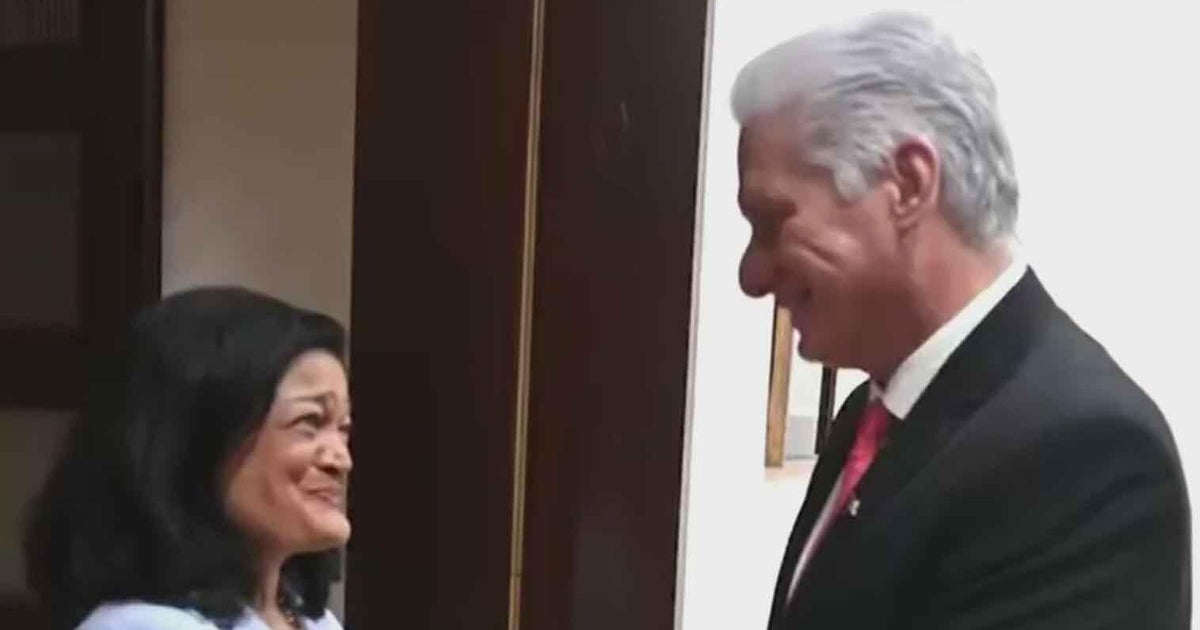
During their trip, the lawmakers also met with Cuban leader Miguel Díaz-Canel and pointed to what they described as signs of change, including the release of prisoners.
However, Cuban radio host Ninoska Pérez disputed that characterization, saying those released were not political prisoners.
“There are not political prisoners in that group,” Pérez said.
Both Gomez and Pérez argue that the Cuban government often labels common prisoners as political detainees when announcing releases.
Pérez also criticized the lawmakers for not engaging with families of alleged political prisoners or questioning government repression.
“They don’t necessarily talk to the family members of the political prisoners,” she said, adding that tougher questions about repression were not part of the delegation’s agenda.
According to Gomez, the visit could carry political consequences in South Florida, potentially impacting Democratic candidates in upcoming midterm elections.