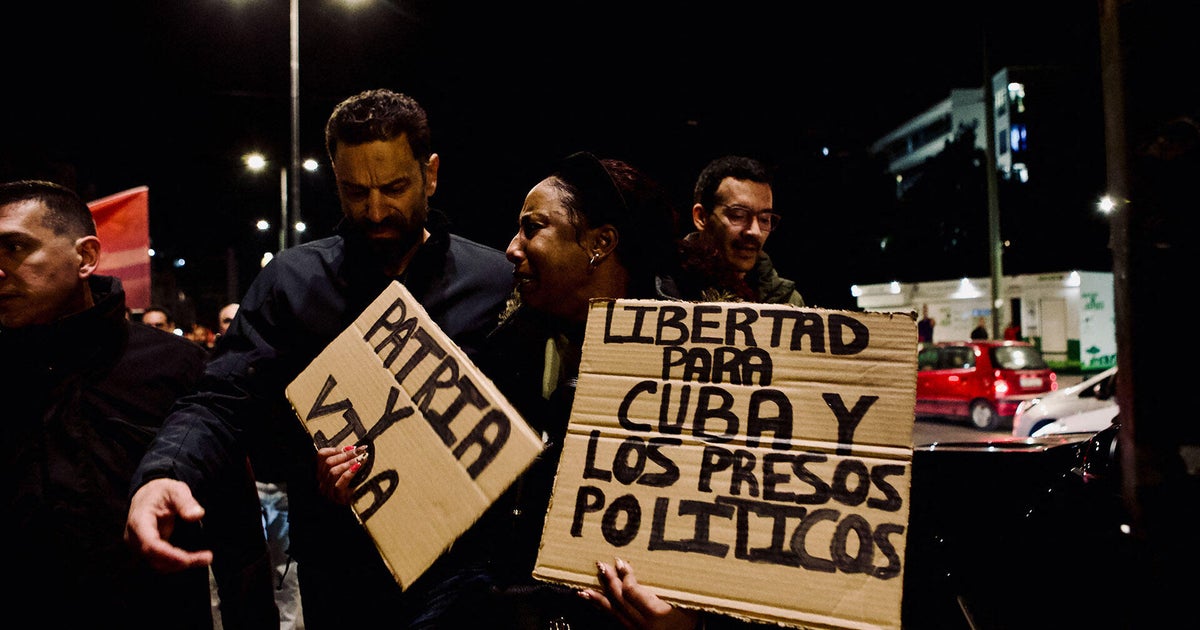
Another night of protests has been reported in Cuba, as frustration grows over prolonged blackouts and worsening living conditions across the island.
Videos circulating on social media show residents in Santiago de Cuba banging pots and pans — a form of protest known as “cacerolazo” — as they demand electricity and relief from the ongoing crisis. The demonstrations mark yet another night of visible unrest, with growing discontent fueled by widespread power outages and economic hardship.
According to Cuban authorities, about 45% of electricity service has been restored nationwide, but roughly half the country remains without power. Reports indicate that more than 150 protests have taken place across the island this month alone.
As tensions rise, Cuban President Miguel Díaz-Canel is also escalating his rhetoric against the United States. In a post on social media platform X, Díaz-Canel accused Washington of waging what he described as a “ferocious war” against Cuba’s economy and warned the U.S. to stay out of the island’s internal affairs.
He also claimed the United States has been threatening “almost daily” to overthrow Cuba’s constitutional order, blaming decades of U.S. sanctions for the country’s economic collapse.
The comments come after recent statements from President Donald Trump, who described Cuba as a “failed nation” and suggested the U.S. could take action. “I do believe I’ll have the honor of taking Cuba,” Trump said. “Whether I free it, take it, or do anything I want with it.”
The escalating war of words is unfolding as conditions on the island continue to deteriorate. At Florida International University, the situation in Cuba has become a major topic of discussion among scholars and analysts.
“For a transition to occur, Díaz-Canel has to go,” said Brian Fonseca, an international relations professor at FIU. Fonseca said the Trump administration appears increasingly skeptical of Cuba’s recent promises to open its economy.
“They’ve said they’re going to make changes, make space for the private sector, without going through any type of transformation,” he said.
According to Fonseca, the U.S. is not currently interested in engaging with Díaz-Canel’s government under the existing system. “I think the United States has been very clear — they are not looking to engage with Díaz-Canel,” he added.
Despite growing pressure, Díaz-Canel struck a defiant tone, warning that any outside intervention would be met with resistance. “Faced with the worst-case scenario, Cuba has one guarantee: any external aggressor will encounter an unbreakable resistance,” he wrote.
As blackouts continue and protests spread, the situation on the island remains volatile — with no clear resolution in sight.Another night of protests has been reported in Cuba, as frustration grows over prolonged blackouts and worsening living conditions across the island.
Videos circulating on social media show residents in Santiago de Cuba banging pots and pans — a form of protest known as “cacerolazo” — as they demand electricity and relief from the ongoing crisis. The demonstrations mark yet another night of visible unrest, with growing discontent fueled by widespread power outages and economic hardship.
According to Cuban authorities, about 45% of electricity service has been restored nationwide, but roughly half the country remains without power. Reports indicate that more than 150 protests have taken place across the island this month alone.
As the blackouts continue, the tensions continue to rise between Cuba and the United States
As tensions rise, Cuban President Miguel Díaz-Canel is also escalating his rhetoric against the United States. In a post on social media platform X, Díaz-Canel accused Washington of waging what he described as a “ferocious war” against Cuba’s economy and warned the U.S. to stay out of the island’s internal affairs.
He also claimed the United States has been threatening “almost daily” to overthrow Cuba’s constitutional order, blaming decades of U.S. sanctions for the country’s economic collapse.
The comments come after recent statements from President Donald Trump, who described Cuba as a “failed nation” and suggested the U.S. could take action. “I do believe I’ll have the honor of taking Cuba,” Trump said. “Whether I free it, take it, or do anything I want with it.”
The escalating war of words is unfolding as conditions on the island continue to deteriorate.
FIU scholars held a conversation about Cuba, saying Diaz-Canel stepping down is the only way to enact change
At Florida International University, the situation in Cuba has become a major topic of discussion among scholars and analysts.
“For a transition to occur, Díaz-Canel has to go,” said Brian Fonseca, an international relations professor at FIU. Fonseca said the Trump administration appears increasingly skeptical of Cuba’s recent promises to open its economy.
“They’ve said they’re going to make changes, make space for the private sector, without going through any type of transformation,” he said.
According to Fonseca, the U.S. is not currently interested in engaging with Díaz-Canel’s government under the existing system. “I think the United States has been very clear — they are not looking to engage with Díaz-Canel,” he added.
Despite growing pressure, Díaz-Canel struck a defiant tone, warning that any outside intervention would be met with resistance. “Faced with the worst-case scenario, Cuba has one guarantee: any external aggressor will encounter an unbreakable resistance,” he wrote.
As blackouts continue and protests spread, the situation on the island remains volatile — with no clear resolution in sight.