Cuba is now facing its 13th consecutive day of protests, as social unrest continues to spread across the island amid prolonged blackouts, fuel shortages, and a deepening economic crisis.
Late Thursday night into early Friday morning, residents in several neighborhoods in Havana took to the streets, banging pots and pans and, in some cases, lighting bonfires to block major roads in the capital — a sign of escalating frustration.
According to Cubalex, a nonprofit organization that promotes human rights, nearly 160 protests have been reported across Cuba since March 6. Videos shared on social media show growing anger among residents, as conditions continue to deteriorate.
Humanitarian aid efforts spark controversy with Cubans in South Florida
While unrest intensifies on the island, efforts to send humanitarian aid to Cuba are also drawing attention — and controversy — in South Florida.
At Miami International Airport, members of the grassroots organization Code Pink said they were preparing to send more than $400,000 worth of food and medicine to Havana. “People in the United States don’t agree with the policy designed to create tremendous hardship in Cuba,” said Medea Benjamin, co-founder of Code Pink.
However, not everyone supports the effort. Ramón Saúl Sánchez, leader of the Cuban exile group Democracy Movement, questioned the delivery process. “We are not opposing them taking food to the Cuban people,” Sánchez said. “We are questioning the fact that they are going to want to deliver the goods to the regime.”
Sánchez pointed to a concern shared by many critics: that humanitarian aid sent to Cuba often ends up under government control. “The regime takes those goods… and sells it to the very victims that are supposed to be helped,” he argued. As a result, Sánchez is urging the Trump administration to allow Cuban exiles to deliver aid directly by boat.
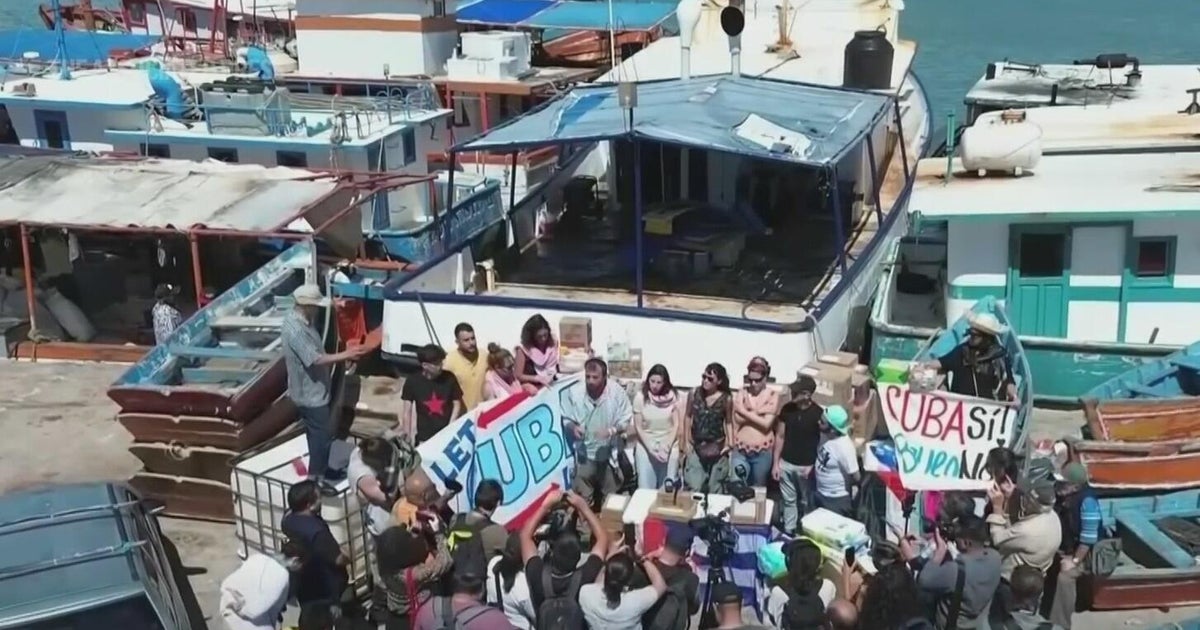
Another aid effort, the “Nuestra América” convoy departing from Mexico, is expected to arrive in Cuba carrying more than 30 tons of food, medicine, and solar power equipment.
Cuba’s crisis is causing political waves in Florida
The situation in Cuba is also creating political waves in the United States. In Tallahassee, Republican State Representative Juan Carlos Porras — whose family fled Cuba — is backing a proposal that could allow Florida-based businesses to invest in Cuba without violating state law. However, Porras stated such provisions would only apply “if there is new leadership — if the communist regime falls in Cuba.”
Back in South Florida, Cuban activists are planning another demonstration. On Saturday at 11 a.m., groups are expected to gather along the Miami River to call on the Trump administration to ease travel restrictions and allow Cuban exiles to return to the island.
As protests continue across Cuba and political pressure builds in the United States, the situation remains fluid — with growing uncertainty over whether change on the island is imminent or still out of reach.