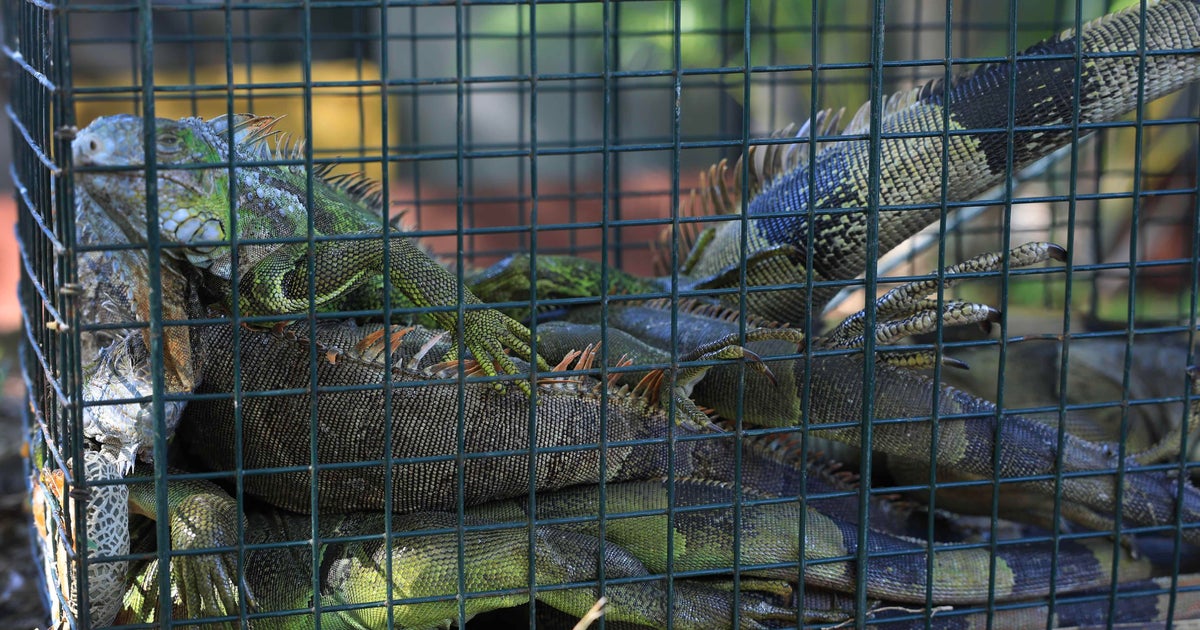
Over 5,000 invasive green iguanas have been removed across Florida counties and cities after freezing temperatures recently put the cold-blooded invasive species in a coma-like state, the Florida Fish and Wildlife Conservation Commission (FWC) said Wednesday.
FWC announced the results of their iguana collection campaign following a historic cold front that brought below-freezing temperatures to most parts of Florida. Wildlife officials clarified they are no longer accepting any more live green iguanas from the public.
How was FWC able to collect these iguanas from Florida residents?
This iguana collection was part of an executive order (EO 26-03) the FWC issued on Jan. 30 where they were able to remove cold-stunned green iguanas from people’s property without a permit from Sunday, Feb. 1, to Monday, Feb. 2.
“As an invasive species, green iguanas have negative impacts on Florida’s environment and economy. The removal of over 5,000 of these nonnative lizards in such a short time span was only possible thanks to the coordinated efforts of many staff members in multiple FWC divisions and offices, our partners, and of course the many residents that took the time to collect and turn in cold-stunned iguanas from their properties,” FWC Executive Director Roger Young said.
Out of the 5,195 total green iguanas the FWC collected and removed, this is where they came from:
- 3,882 from the Sunrise drop-off location
- 1,075 from the Tequesta location
- 215 from the Marathon location
- 23 from the Fort Myers location
Iguanas fall into a coma-like state known as torpor
Despite how they look, cold-stunned iguanas are not technically frozen.
Wildlife experts say the reptiles are cold-blooded, so when temperatures drop into the 40s or below, their bodies shut down to conserve energy. This temporary, coma-like state, known as torpor, causes them to become immobile and unresponsive, sometimes falling from trees.
Because iguanas are an invasive species in Florida, by law, they cannot be relocated or released back into the wild. The FWC said it follows state-approved humane methods of euthanasia for invasive species like iguanas.
The FWC advised that if Florida residents find a cold-stunted iguana, they do not bring it into their home or any warm building. Iguanas can recover quicker than expected under those conditions, and once they do, they can be dangerous due to their sharp teeth and claws.