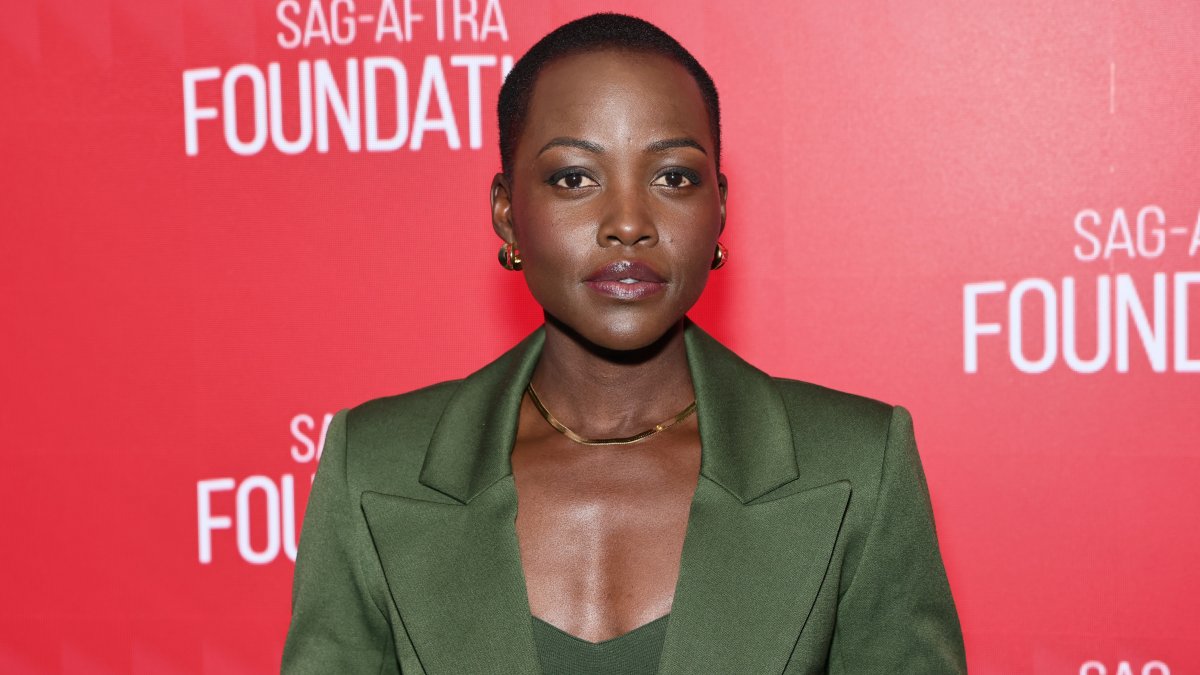
Lupita Nyong’o thought her symptoms were normal until 2014. She was fatigued, pre-anemic and burdened by pelvic pain once a month.
Her Christian sex education did little to contradict her experience.
“They taught me that once my period started, that I should expect to be in pain every month. So, when I was experiencing the heavy bleeding, it didn’t sound an alarm. The clotting was not anything remarkable to me,” Nyong’o tells TODAY.com. “I didn’t understand my body. I didn’t know what was going on, and I didn’t know to be worried.”
So, she kept on. Nyong’o rose to fame and won an Oscar. “It was a busy year for me,” she says.
A routine gynecological check-up, however, revealed her symptoms were far from standard. Only after mentioning her pain more than once did her physician order an ultrasound. “And that’s when the fibroids were revealed,” says Nyong’o.
She had about 30 uterine fibroids, growths made of muscle and tissue along the walls of her uterus that can cause bleeding between periods, lower back pain, frequent urination and abdominal swelling, among a host of other symptoms, according to the Cleveland Clinic.
Her doctor said her only options were to continue living in pain or surgically remove the fibroids. She opted for fibroid-removal surgery called a myomectomy.
But the actor and author’s relief was short-lived: Now, 12 years later, they’ve returned. Nyong’o has more than 50 fibroids causing more pain, and her treatment options remain largely the same.
To broaden the scope of solutions that don’t require going under the knife again and again, Nyong’o has partnered with the Foundation for Women’s Health to launch a research grant supporting the development of minimally and non-invasive fibroid treatments. “It’s very empowering to play a role in solving your own problem,” she says.
On Feb. 25, a new phase in the effort began: the #MakeFibroidsCount social campaign, which encourages people to donate to support fibroid research and those affected by the condition to share their stories with the hashtag.
Common shouldn’t mean normal
Between 40% and 80% of people with uteruses have fibroids, and they impact Black people more than any other demographic, according to the Mayo Clinic. Still, questions about what causes them and how to prevent them remain unanswered.
When Nyong’o asked her gynecologist and surgeon about what causes fibroids, they said, “We’re not really sure,” Nyong’o recalls. When she asked how she could keep them from coming back after surgery, she was told, “Well, it’s only a matter of time.”
Her doctors assured her that fibroids are common. “And that was supposed to be a consolation,” says Nyong’o. “But I was like, ‘OK, if they’re this common, that doesn’t make it normal, right?’”
Nyong’o revealed her diagnosis in a 2025 Instagram post to connect with anyone who’s felt dismissed or deserted while dealing with fibroids. They deserve better and still do, she wrote.
Taking power back
Unless the uterus is completely removed, surgery doesn’t guarantee fibroids won’t come back, according to the Cleveland Clinic.
“When I found out two years ago that my fibroids were back — back with a vengeance — and I was so upset because I feel powerless. It’s a ticking bomb,” she says. “They’re going haywire in my body, and nobody is helping. Nobody knows what to do to mitigate them.”
To help give people with fibroids more treatment options, Nyong’o joined forces with the Foundation for Women’s Health to address the gender health gap that leads to fewer resources for diseases primarily in women, often because of medical stereotypes that chalk them up to stress or exaggeration.
“It shouldn’t be the case that a disease that affects 80% of women, the most common surgical intervention is organ removal,” Katy Brodsky Falco, founder and executive director of the Foundation of Women’s Health, tells TODAY.com.
Women’s pain, she adds, deserves thoughtful examination, and The FWH x Lupita Nyong’o Uterine Fibroid Grant aims to fulfill what she says is the urgent need to reshape fibroid treatment.
“We are going to select innovative proposals that have been submitted from across the country to fund non-invasive and minimally invasive treatments so that … if we look forward to the next generation of women, doctors will not be uneducated about the symptoms of fibroids and then provide organ removal as a line of first offense against this,” says Brodsky Falco.
Finding community
Before her diagnosis, Nyong’o was only vaguely familiar with fibroids. “I had members of my family who said they had fibroids, but … the way it was mentioned was like it was a pimple,” says Nyong’o. “There was just a lightness, a casualness when I heard it mentioned.”
Family history can increase one’s chances of having fibroids, but she only discovered their severity when they impacted her. She wanted transparency, and she wanted community.
“I started off by speaking to my family members and my friends, and I was stunned by how many people said, ‘Oh, I have them too,’” Nyong’o recalls. Like her, they’d had myomectomies, and others had hysterectomies.
“I couldn’t believe that something that I was experiencing in such isolation was happening all around me,” she adds.
Silence can no longer be the status quo, Nyong’o says. And speaking up, Brodsky-Falco adds, reminds people that they have the right to advocate for themselves and for better treatment options.
“I have been rewarded so much by being able to tap into and join forces and connect arms with other women who have been fighting this fight for a long time now,” says Nyong’o. “And (I’m) introducing other women to the power of sharing their story.”
This story first appeared on TODAY.com. More from TODAY: