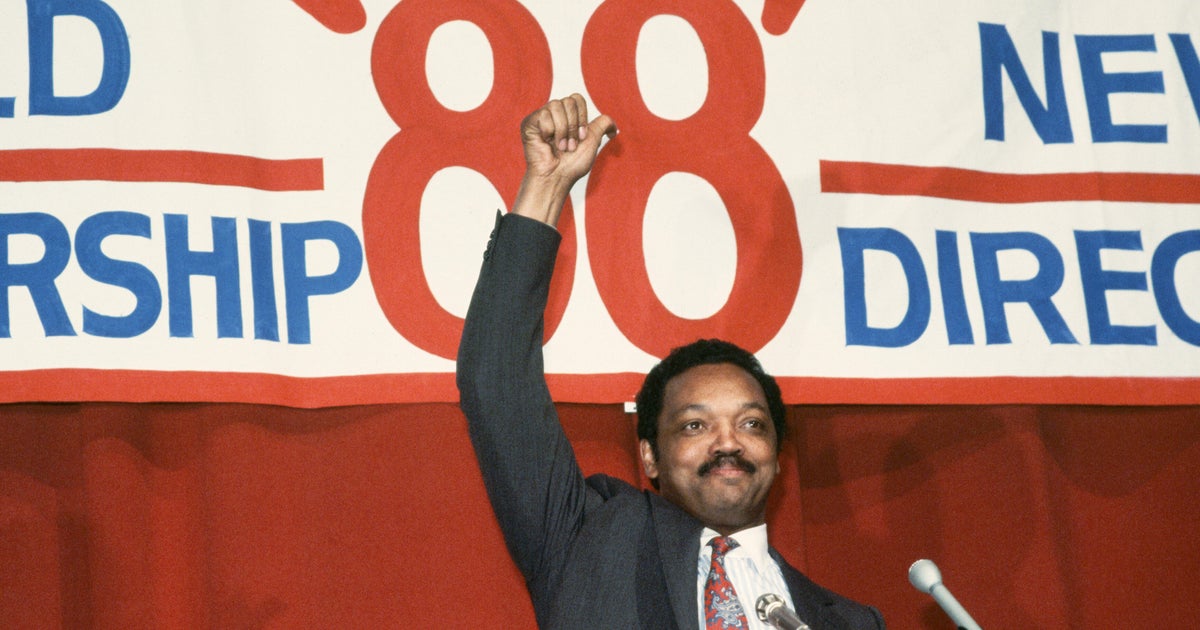
The late Rev. Jesse Jackson might best be remembered as the founder and longtime leader of the Rainbow PUSH Coalition, a Chicago-based civil rights organization, but he also played a pivotal role in presidential politics.
Jackson ran for president in 1984 and 1988, and although he lost the Democratic primary both times, he helped pave the way for Barack Obama to get elected the nation’s first Black president in 2008.
Not only did Jackson’s two bids for president send millions of Black voters to the polls, many for the first time, but it solidified Jackson as a major force in the Democratic Party, and persuaded its leaders to change the party’s rules for presidential primaries.
In 1983, Jackson began his first campaign for president, becoming the first African American to launch a nationwide presidential bid. While former Congresswoman Shirley Chisholm was the first Black person to run for president in 1972, she wasn’t able to get on the ballot in several states.
Jackson was the first Black candidate to get on the ballot for president in all 50 states. While he would end up winning only one primary contest that year, he would go on to much greater political success in his second bid for the White House in 1988.
His surprise victory in the Michigan caucuses in 1988 would briefly give him the lead in delegates in the race for the Democratic nomination, leaving the favored Michael Dukakis campaign scrambling.
Despite the growing populist appeal of Jackson’s campaign, polls after his Michigan victory showed him trailing far behind Vice President George H.W. Bush in head-to-head matchups in a general election, while polls showed a Dukakis-led ticket with Jackson as vice president narrowly beating Bush.
With the focus on the campaign turning to the question of electability, Dukakis went on to pull out a decisive victory in the Wisconsin primary, and went on to take the nomination.
But a key facet of the campaign was Jackson’s frequent criticism of Democratic Party rules for earning delegates. Party rules required candidates to receive 20-30% of the vote in a congressional or legislative district and statewide in order to qualify for delegates.
While Jackson ended up with approximately 1,000 delegates in the race, he was shut out of any delegates in a few states with winner-take-all rules for their primaries.
After Jackson’s surprising performance in the 1988 campaign, the Democratic Party changed its rules to allow candidates who receive at least 15% of a state’s overall vote to get a share of that state’s delegates. In exchange for Jackon’s support in the general election, Dukakis agreed to replace winner-take-all Democratic primaries with proportional allocation rules.
That rule remains in place today, and helped Barack Obama go on to win the 2008 presidential election. Because all Democratic contests allocate delegates proportionally, Obama was able to maximize his delegate count even in primaries he lost, winning the delegate race despite a marginal edge over Hillary Clinton in the popular vote.
This was the same man who wore a bulletproof jacket provided to him by the Secret Service as a matter of course during both his campaigns. But for the first time, he was discussing with his closest aides what they would do about Cabinet positions and White House appointments.