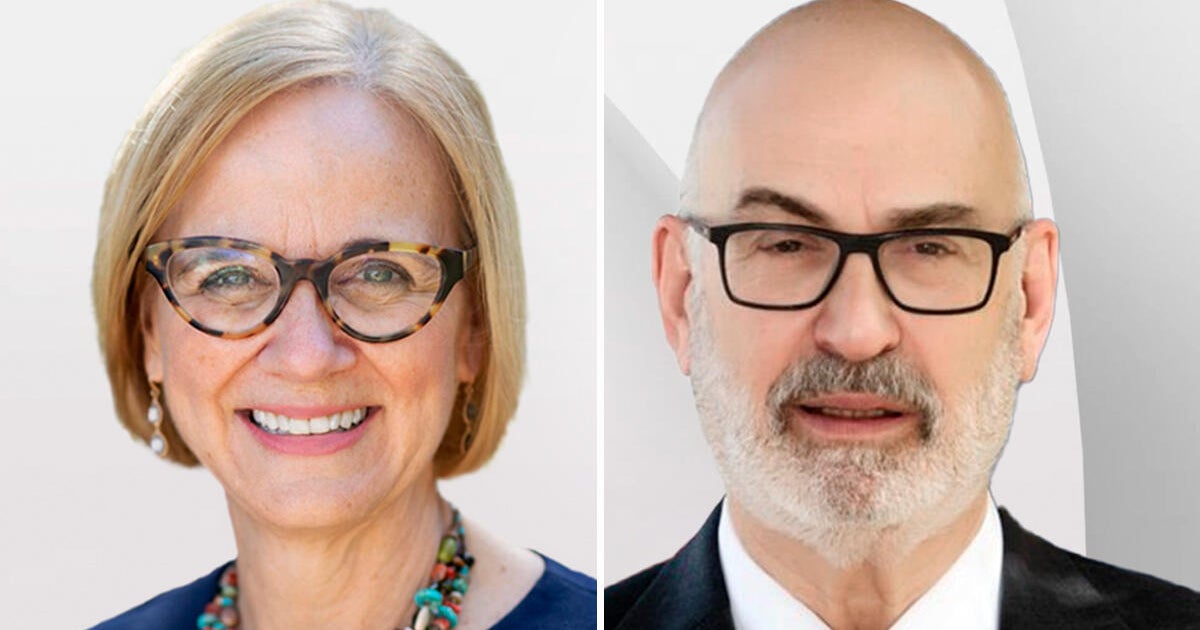
With voters set to choose the City of Miami’s next mayor in a runoff election on Dec. 9, the field has narrowed to two candidates offering sharply different visions for the city’s future: former County Commissioner Eileen Higgins and former Miami City Manager Emilio Gonzalez.
The pair advanced from a crowded 13-person field on Nov. 4, with Higgins leading at 36% and Gonzalez taking 19% during the general municipal election, according to the Miami-Dade County Supervisor of Elections. Because no candidate secured more than 50% of the vote, a runoff will now determine who takes the city’s top job for the next four years.
Both candidates have spent recent weeks outlining their contrasting approaches on housing, flooding, immigration, growth and the tone of leadership they believe Miami needs. They faced off in a CBS News Miami debate moderated by Jim DeFede on Nov. 25, offering voters the clearest comparison yet of their priorities.
Early voting starts this Friday and runs through Sunday.
Here’s what you need to know about the candidates and their plans.
Who is Eileen Higgins and what are her plans for the City of Miami?
Higgins, who served eight years on the Miami-Dade County Commission, has centered her campaign on restoring public trust and bringing what she describes as calmer, more collaborative leadership to City Hall.
A major pillar of her platform is affordable housing. She says the city should use its own land to build housing for working families, mirroring projects she supported at the county level. She also argues Miami’s budget has grown too quickly without producing better services and has called for a full review of spending.
On flooding and climate challenges, Higgins supports updating regulations to allow permeable pavement and speeding up park construction to improve drainage citywide.
She also backs expanding the City Commission from five to nine members, saying Miami’s legislative body is unusually small compared to other major cities and leaves many communities underrepresented.
Higgins has pledged to serve as a full-time mayor with no outside employment and says she would replace City Manager Arthur Noriega, though she did not name alternatives.
On immigration enforcement, Higgins has voiced strong concerns, calling recent actions in Miami “inhumane and cruel,” and said she was glad not to receive former President Trump’s endorsement.
Her message to voters centers on restoring confidence in city government: “I’d like to restore trust in City Hall,” she said.
Who is Emilio Gonzalez and what are his plans for the City of Miami?
Gonzalez, a retired Air Force colonel and former city manager under Mayor Francis Suarez, is pitching himself as the experienced administrator capable of fixing what he sees as deep structural issues in Miami’s government. He has been endorsed by Gov. Ron DeSantis and President Trump, an endorsement he said came “by surprise.”
A top priority for Gonzalez is overhauling Miami’s permitting system, which he called “broken” and damaging to the city’s reputation. When asked why the system wasn’t improved during his tenure as city manager, he said the problems were not as severe at the time and pointed to commission gridlock as a barrier to reforms.
On housing, Gonzalez argued that “affordable housing” has become a “misnomer,” saying many projects labeled as affordable are still out of reach for police officers, teachers and essential workers. He says the city needs a more realistic approach to affordability.
Gonzalez opposes expanding the City Commission, arguing Miami needs “better commissioners, not more of them.”
On flooding, he supports stronger mitigation measures and suggested using city parks as water-storage reservoirs.
He also says Miami could absorb a projected $100 million hit if Gov. DeSantis’ proposed homestead tax repeal becomes law, insisting it can be offset through efficiencies.
Gonzalez said he would drop any outside employment if conflicts arise and also pledged to replace City Manager Arthur Noriega.
In his closing message, Gonzalez emphasized accountability and ambition for Miami’s future: “My goal is simple: I want to return Miami to greatness,” he said.
Miami and some of its biggest challenges
The City of Miami is home to roughly 500,000 residents, making it one of the most densely populated major cities in the U.S. Its compact size, rapid growth and international draw create a city where the demand for housing, transportation and public services often outpaces the available land and infrastructure.
As a coastal community, Miami also faces significant long-term challenges, including flooding, sea-level rise, extreme heat, aging infrastructure and high housing costs. Balancing growth with resilience has become one of the city’s biggest tests, requiring decisions on development, zoning, transportation and climate adaptation that will shape Miami for decades to come.