There’s new hope for children living with debilitating pain. Gene therapy is now being used for certain cancers and sickle cell anemia.
A South Florida teen was among the first to get this life-changing treatment.
“I’m feeling great,” Caden Major said recently.
And that’s a huge improvement.
“I was having pain every day, constantly,” Major said. “Now I have no pain whatsoever. No crisis. No fatigue. I could run up, down the hall if I really wanted to.”
How does the treatment work?
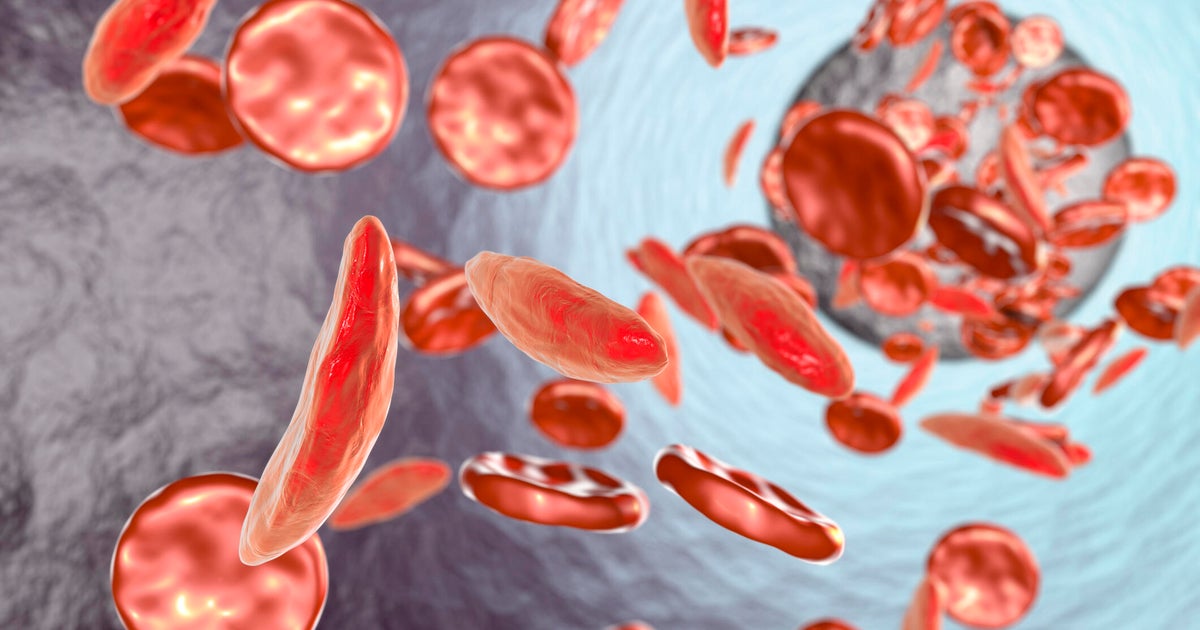
Major was born with sickle cell disease – an inherited blood disorder affecting red blood cells.
Now at 19 years old, doctors said he’s essentially “cured” thanks to gene therapy treatment at Holtz Children’s Hospital.
“Rather than giving the patients cells from somebody else, we give them their own cells back that have been genetically manipulated in such a way that it corrects the genetic defect,” explained Dr. David Crawford, the director of Pediatric Stem Cell Transplantation at UHealth Jackson Children’s Care.
That’s a change from past treatment options like a bone marrow transplant, in which donors are harder to come by, and the procedure is pretty dangerous.
“When you see him, you remember him at his worst of times in the hospital on pain meds,” said Dr. Warren Alperstein, a pediatric hematologist and oncologist at UHealth Jackson Children’s Care. “Then you see him now. It just brings a smile to your face, right? That’s why we do what we do. That’s why we show up to work.”
The path to getting approval for gene therapy
Major is one of the first pediatric patients in Florida to receive gene therapy for sickle cell disease since the FDA approved it for that use.
But it was a long road.
First, he had to undergo chemotherapy. Then, he had to remain in isolation for weeks as his genes were edited.
“I was just hoping and praying that it would work,” said Francita Tador, Caden’s mother. “So, when I saw what it did for Caden, I was so excited about the possibility that it can do for many others that’s out there with sickle cell disease. So, I was ready to tell this story immediately.”
Inheriting sickle cell anemia
Both of Major’s parents have sickle cell anemia, but they say their pain was never quite like his.
They say their son was simply existing, but now, he’s truly living.
“I cried actually to see him going from when he was having pain to now no pain,” said Damien Major, Caden’s father. “He’s up moving around, out and about, goes out now, he can hang with his friends. It’s a totally different life.”
A renewed hope for the future
Major is now planning his next chapter.
He had to take a break from school during his treatment, but he hopes to eventually go to college and pursue a career in the medical field– inspired by his own health journey.
“It’s amazing to be one of the first to do it,” he said. “But I really just wanted to be free of the sickle cell, and so now that I’ve finally gotten through that, I just want it to be more accessible for more people so they could get it and get the same opportunity.”
The FDA approval is for kids 12 and older, but doctors hope it will be extended to younger children, too.
Right now, the biggest barrier to access is cost, and not all insurances will cover it.