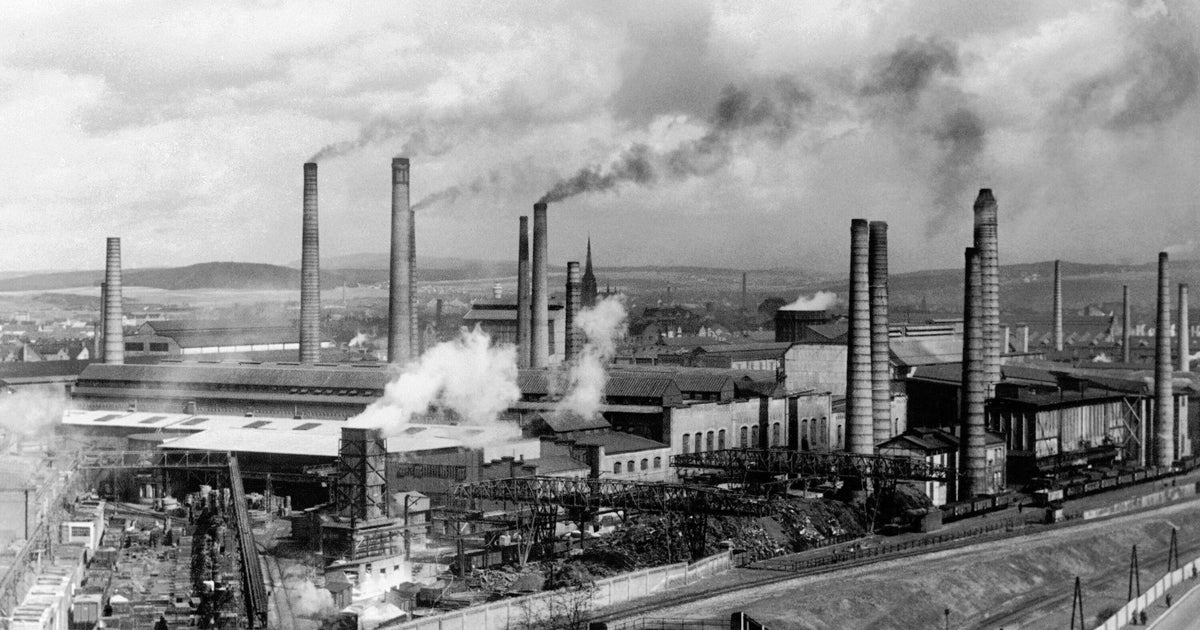
New evidence shows that the health impacts of the Industrial Revolution varied more widely than previously believed, challenging the longstanding narrative that urban areas were uniformly polluted while rural communities remained comparatively untouched during the rise of polluting industries, according to a new study.
The study — “Geochemical Tales of Individual Lives in the Industrial Revolution: Untangling the Impacts of Pollutant Exposure in Two English Towns” — was published on Wednesday in the journal Science Advances. An interdisciplinary team made up of researchers from the University of Miami’s Rosentiel School, Nashua Community College, Seton Hall University, the Smithsonian Institute, The Ohio State University and the University of Michigan coauthored the study.
A significant finding from the study was that exposure to toxic elements found in industrial goods did not follow a simple “urban vs. rural” divide but instead formed a broad spectrum shaped by local industry, social context and individual identity.
Secrets hidden in bones helped break away from historical bias
The key to the study’s success was combining a “wealth of historical evidence such as sex, age and occupational data with bone geochemistry and isotopic analysis,” researchers said. The approach allowed the research team to examine the skeletal remains of 94 people from two 18th- and 19th-century towns in England — the industrialized South Shields and rural Barton-upon-Humber — to trace how industrial pollution accumulated in the body over a lifetime. Researchers said that the direct physiological record offered “an objective view of past health, bypassing the biases and gaps of written history and revealing how people experienced industrialization.”
By sampling the adults’ and adolescents’ long bones (primarily the femora, or thigh bones) to measure the concentration of heavy metal contaminants such as arsenic, barium and lead, researchers were able to reconstruct lifetime contact with key industrial pollutants and compare exposure patterns across communities, sexes and social identities.
In their findings, researchers discovered that pollution exposure varied significantly by sex and biosocial identity. For example, women who lived in the industrial South Shields had “markedly higher concentrations” of arsenic and barium than both men in their own community and women from the agrarian town of Barton-upon-Humber, researchers said.
“Examining the experiences of people in South Shields and Barton-upon-Humber not only allows us to uncover past injustices but also provides evidence to guide policy and protect vulnerable populations from similar exposures in the future,” said lead author Sara McGuire from Nashua Community College, Seton Hall University and the Smithsonian Institution.
McGuire continued, saying that the historical pattern echoed challenges faced by today’s marginalized communities, such as the Flint water crisis in Michigan.
The main challenge was researchers determining how much the bones were contaminated before and after death
Ali Pourmand, a professor of geosciences at the University of Miami’s Rosential School, said the work provided a rare collaboration between anthropologists and isotope geochemists to “give a glimpse into the lives of individuals through the rising pollution of the Industrial Era.”
Pourmand continued, saying that one of the main challenges that the research team faced was disentangling the heavy metal signatures that accumulated during an individual’s lifetime from the potential contamination caused after burial when the bones came into contact with the soil over the centuries. This was accomplished by contrasting the isotopic signatures of lead and strontium in the burial locations’ soil and for all 94 bodies using the multi-collector mass spectrometer at the Neptune Isotope Lab at the Rosential School.
Joshua Prezant, University of Miami
“The isotopic composition of burial soil and the bone samples were significantly different,” he said. “This provided the crucial evidence we needed to argue the heavy metals measured in the bones were the result of lived experiences of those individuals.”
By revealing the complexity of exposure to pollution during one of history’s most transformative periods, the study offered a more nuanced understanding of how industrial change shaped health. It also highlighted the value of bioarcheological data in reconstructing the lived past.