Eliott Rodriguez came face to face with Fidel Castro, reported the Cuban leader’s death decades later, and stood in Havana during President Barack Obama’s historic visit — three moments that defined both history and a career devoted to serving South Florida.
For the longtime CBS News Miami anchor, Latin America was not just a beat, it was a calling.
From the U.S. invasion of Panama to political turmoil in Nicaragua and Venezuela, the devastating 1985 Mexico City earthquake, and multiple reporting trips to Cuba, Rodriguez was often on the ground as major events unfolded.
Eliott Rodriguez’s deep ties to Cuba shaped his journalism
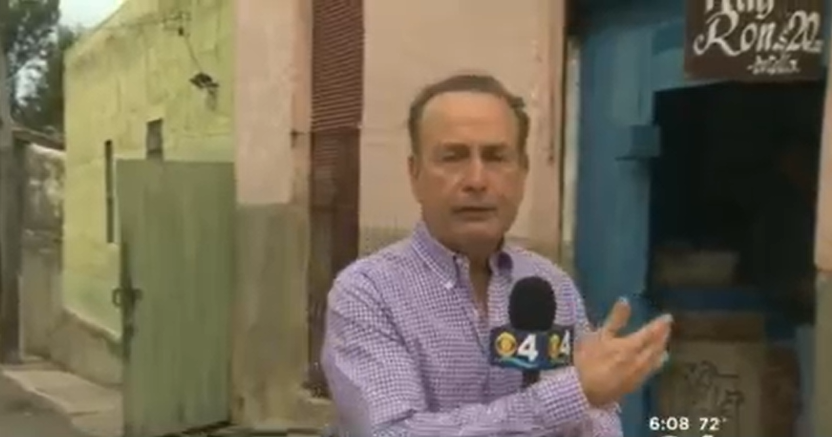
Several of those assignments also carried deep personal meaning. Reporting from Cuba allowed Rodriguez to visit the Cuban branch of his family and see what was once his family’s store in the Havana suburb of Regla.
“Before the revolution my family members were business owners,” Rodriguez recalled. “After the revolution, they became employees.”
Rodriguez also brought historical context to papal visits to Cuba, offering insight into their political and cultural impact. Reflecting on Pope John Paul II’s visit, he said the trip brought real change.
“The Pope helped broker a deal to open diplomatic relations between the U.S. and Cuba,” Rodriguez explained.
As a veteran journalist, Rodriguez did not shy away from asking tough questions — even of Fidel Castro himself. Years later, he remembered the encounter.
“I started asking him a question. He was a little taken back that I could speak Spanish,” Rodriguez said. “He does not answer questions. He does not answer questions. Let me put it that way.”
Covering Fidel Castro, Elián González and defining moments in history
One of the most emotionally charged stories Rodriguez covered was the international custody battle over Elian Gonzalez in late 1999. He reported on the bitter dispute involving Fidel Castro, the U.S. government, and Miami’s Cuban exile community, a saga that ended when federal agents forcibly removed the young boy from his relatives’ home in Little Havana.
When Fidel Castro died in the early morning hours of Nov. 25, 2016, Calle Ocho erupted in celebration. Rodriguez became the steady, reassuring voice guiding the community through one of the most anticipated and emotionally complex stories of his career.
Within days, Rodriguez traveled to Cuba to cover Castro’s funeral, following the dictator’s funeral caravan from Havana to the eastern end of the island.
Reporting to CBS News Miami viewers, Rodriguez said: “It will be the end of the road for the caravan for Fidel Castro, but his supporters hope it is not the end of the road for his revolution.”
As Eliott Rodriguez steps away from the anchor desk, CBS News Miami and its viewers will miss his deep knowledge of Latin America, his calm authority, and his personal connection to the stories he told — a legacy that will be difficult to eclipse.