The New Year’s Eve celebration in Times Square — also known as the “Crossroads of the World” — is one of the most recognizable parties. The annual end of the year celebration wouldn’t be complete without the confetti drop at midnight. Treb Heining is behind the spectacle and for more than 30 years has led volunteers through a once-in-a-lifetime experience.
Go confetti! Go confetti! Go confetti!
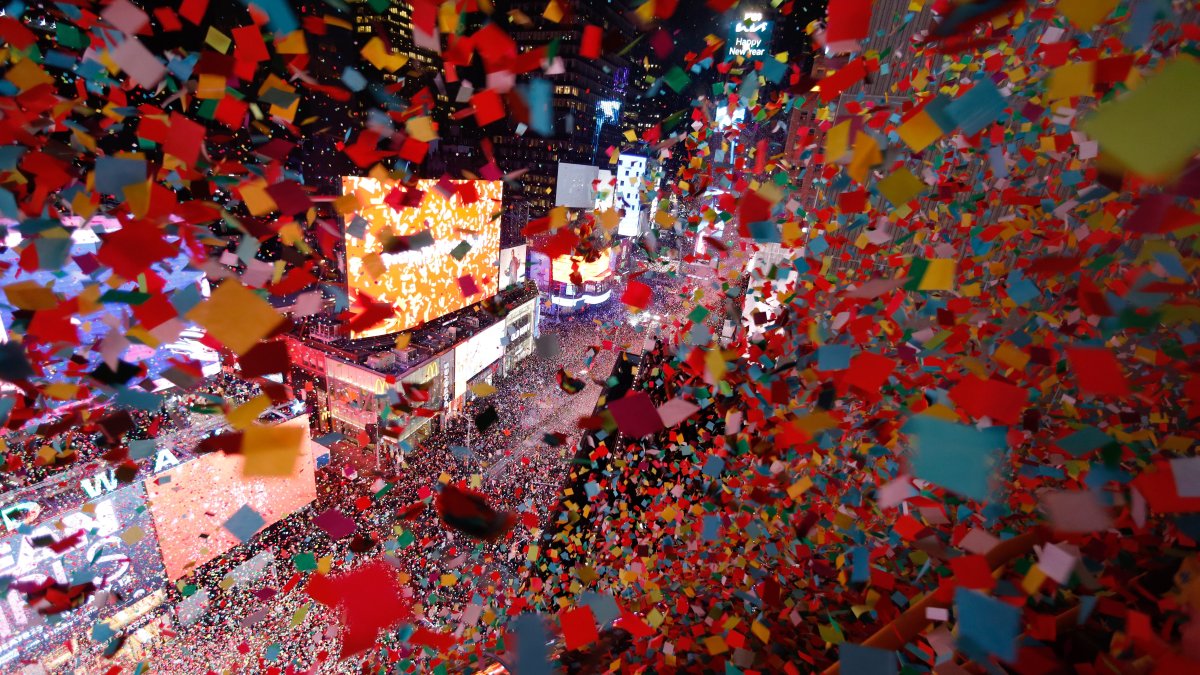
Before the final seconds of the year are counted down and the Times Square ball drops to its base, the New York City air will already be filled with 3,000 pounds worth of multi-colored confetti.
Each two-inch by two-inch square piece of tissue paper floating above the world’s largest New Year’s Eve party will have been released by hand.
“We want the confetti in the air by the time the ball is at the base and it’s a new year,” said Treb Heining, who has organized each Times Square confetti drop since 1992. “So, when the live feeds from around the world tune in, they already see the confetti blizzard.”
The colorful squall is produced by more than 100 volunteers situated at various building setbacks and windows surrounding One Times Square. Each location has a crew chief who is in communication with Heining through radio.
The boxes of confetti, which are made in Pennsylvania, are delivered to their respective location two days before New Year’s Eve. Volunteers lucky enough to have secured their spot for the year-end bucket-list experience then attend an orientation where they’re shown how to properly and safely disperse the confetti.
“It’s a real workout if you do it correctly,” Heining said. “You can get a lot of your aggressions from the year out in doing the confetti.”
It’s a real workout if you do it correctly. You can get a lot of your aggressions from the year out in doing the confetti.
Treb Heining
Dispersers get in position shortly before midnight, high above the roughly one million people on the streets below.
“We usually start the confetti about 20 seconds before midnight,” Heining said. “That’s when I give the go.”
As the clock ticks down, the ball descends, and the world watches, Heining raises his radio…
“Go confetti! Go confetti! Go confetti!”
‘The man who had the idea of balloons at parties’
BRENDAN SMIALOWSKI/AFP/GettyImages
BRENDAN SMIALOWSKI/AFP/GettyImages Treb Heining is known for having created the balloon decor industry.
Heining, despite his role as the New Year’s confetti king, is better known as the father of the balloon industry.
So much so that the California native even made an appearance on “Late Show with David Letterman” in the 1990s.
“This is amazing,” Letterman said. “This is the man who had the idea of balloons at parties. Unbelievable, isn’t it?”
Heining’s first job, in 1969 when he was 15 years old, was at Disneyland where he sold Mickey Mouse balloons.
“I learned how to tie balloons fast,” he said with a laugh.
He turned that skill into a lifelong career, which ultimately led him from the Magic Kingdom to Times Square.
Heining, in the 1970s, invented items like the ballon arch and balloon column. He started his company Balloon Art by Treb in 1979, specializing in balloon décor for parties and events.
The company, which began by designing balloon art for smaller events like mall openings, went on to oversee décor for large-scale spectacles like the Opening Ceremony of the 1984 Summer Olympics in Los Angeles, Super Bowls, the Democratic and Republican Presidential National Conventions, Academy Award ceremonies and other marquee events.
Heining’s former employer took notice.
“Disneyland called to do work inside the park,” he said, with his company going on to design balloon installments for the park’s attraction openings and celebrations.
In the 1990s, Heining developed what he says is the best-selling balloon of all time: the theme parks’ popular Glasshouse Balloon, a clear-plastic balloon containing a big-eared Mickey balloon within it.
The partnership between Disney and its former balloon vendor-turned-balloon king continues to this day.
“So,” he said, “we now create balloons for all the Disney parks worldwide.”
His other worldwide responsibilities often took him to New York, where in the early 1990s a company called the Business Improvement District of Times Square – now the Times Square Alliance — was launched to revitalize the area. He received a call from one of the heads of the company saying they’re in charge of the ball drop and would like to do something to make the event more special.
“I said, ‘Well, confetti is a natural,’” Heining said. “So, that’s how it all started. We started back in 1992-1993, that New Year’s, and it’s been a tradition ever since.”
‘Goosebumps all over my body’
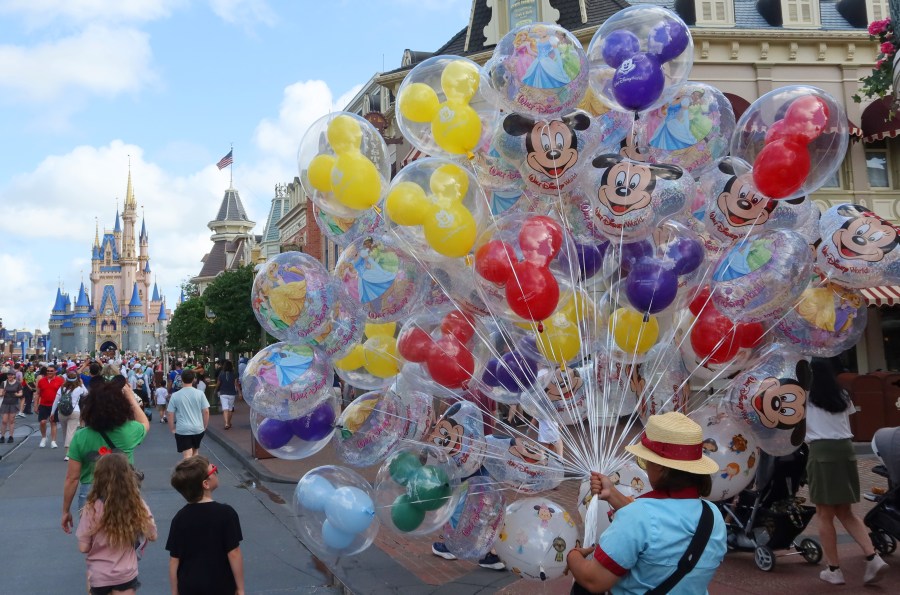
Heining was familiar with confetti dispersal from his work at the Disney parks in Anaheim and Orlando.
But in the swirling winds of winter in Midtown Manhattan with hundreds of thousands of people below?
“I had no idea how it would look,” he said.
New Year’s Eve had been celebrated in Times Square since 1904, with the inaugural bash commemorating the opening of The New York Times then headquarters. Times Tower — situated on a triangle of land at the intersection of 7th Avenue, Broadway and 42nd Street – became the annual year-end celebration destination.
The Times Square ball was introduced in 1907 in the form of a seven-hundred-pound iron and wood ball lowered from the tower’s flagpole.
Confetti wasn’t used on New Year’s Eve in Times Square until 1992 when Heining brought it to the party.
“It was a huge honor to just be involved with the ball drop in Times Square,” he said. “I grew up with it, we all did, watching it. And I remember being very nervous that first year, wanting it to go well.”
And then when I said, ‘Go Confetti!’ and the first confetti started hitting the air, the crowd noise doubled again. And it was like goosebumps all over my body.
Treb Heining
He identified seven buildings in Times Square where he hoped to disperse the confetti, some from setbacks and others from windows, and made the arrangements with management of each location.
“We did it by hand the very first year,” he said, saying confetti machines wouldn’t produce the same volume, timing or magic. “I said, ‘Let’s do it simple and let’s have a few people.’ So, we did it, and the vortex and the wind currents were so great. It was a smash success even the first year.”
Unlike modern day New Year’s Eve celebrations in Times Square, Heining said there were no star-studded outdoor performances. No music. No speakers. Just people, a clock and a building sense of anticipation for the stroke of midnight.
“They’re loud all night, but all of a sudden, the crowd noise doubles when the ball starts down,” he said. “It’s hard to hear yourself think. And then when I said, ‘Go Confetti!’ and the first confetti started hitting the air, the crowd noise doubled again. And it was like goosebumps all over my body.”
‘Like getting tickets to the Masters in Georgia’
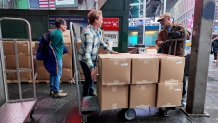
NBC New York
NBC New York Crews unload boxes of confetti in Times Square for New Year’s Eve.
Roughly 70 boxes, each filled with about 45 pounds of confetti, are delivered to Times Square every Dec. 29 – leaving the 30th as “an emergency day” for potential shipping issues.
“This will be my 34th year and, knock on wood, we’ve never had to use that emergency day yet,” Heining said.
The confetti is manufactured by The Beistle Company in Shippensburg, Pennsylvania – a borough located over 200 miles southwest of Times Square. It’s made of recycled tissue that is 100 percent biodegradable and flame retardant.
“We work on the colors with them over the years,” Heining said. “We lighten up some of the darker colors so that it looks better. And we have a blend now that looks really good in the nighttime with the lights.”
The boxes are unloaded from around 9 a.m. to noon and pushed through Times Square to the designated buildings. The confetti is then removed from its original packaging, fluffed out and separated into around 130 boxes — mixed with thousands of pieces of confetti with handwritten New Year’s wishes written on them from those who visited the Times Square Wishing Wall.
Those boxes, days later, will be emptied by a crew of over 100 volunteers whose official title is “Confetti Dispersal Engineer.”
“We have people from all over the world that do this now,” Heining said. “I have to say no every year to hundreds and hundreds of people. So, it’s a real bucket list for a lot of people across the world.”
Applicants across the globe fill out the “Official Confetti Dispersal Engineer Request Form” at the website makingmagicnye.com. Heining said he keeps the list of names in a folder and begins the selection process around February. Engineers, some of whom are returnees, are notified in July if they have been selected for the upcoming New Year’s Eve confetti drop.
“I take the oldest and work up the chain,” Heining said. “We can only say yes to about 30 or 40 people because everybody gets to bring one person with them, and we can’t have a crew of more than about 100 to 120 because of the space on the setbacks. It’s a very exclusive thing. It’s almost like getting tickets to the Masters in Georgia.”
The confetti engineers collect their credentials on delivery day then return to the same location on New Year’s Eve at 7 p.m. for an orientation meeting.
“There’s a roll call, the introduction of every single person and where they’re from,” Heining said. “Then we just go step by step of what they’re going to be doing, where they’re going to be going, who their crew chief is, and we go through how to disperse the confetti correctly and safely.”
‘The largest group of sober people in Times Square’
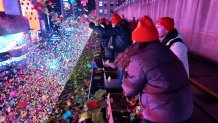
NBC New York
NBC New York Volunteers drop thousands of pounds of confetti over Times Square on New Year’s Eve.
Engineers are instructed to launch a two-handed scoop of confetti like “you’re trying to throw it across the street.”
“It’s something that I always say is a physically violent act,” Heining said with a laugh. “You are taking a clump of confetti and throwing it as hard as you can, getting another and throwing it and throwing it and throwing it.”
The crew walks down 43rd Street before separating into groups at seven separate locations, each led by a crew chief who is in communication with Heining by radio, and wait for their cue. They take their positions at the building windows or setbacks, where boxes of confetti are waiting.
The first dispersal occurs at 10 p.m. when yellow and purple confetti is dropped for event sponsor Planet Fitness. Then more watching the clock.
“The 11 o’clock hour is always very electric because the crowd noise goes up at that point,” Heining said. “We’re going through the final setups and all that. I do several radio checks in the 11 o’clock hour. Then the tradition has been since the year 2000 that John Lennon’s song ‘Imagine’ starts, and when that song starts, that’s when I give the final standby to all my crew chiefs.”
The music in Times Square on New Year’s Eve has become part of the soundtrack of Heining’s life. Set to turn 72 in January, Heining was a music major in college. A resident of Newport Beach in California, he rings in each New Year on the opposite coast, often times far from his wife and children, whom he calls from Times Square while that familiar playlist blares in the background.
“It’s always the music for me,” he said. “There’s always a lump in my throat. It’s hard for me to even talk about it now. ‘Old Lang Syne’ kicks in, and then Frank Sinatra’s ‘New York, New York.’ It’s just a very emotional night for me. But it’s always fun. It’s always the greatest place to be for New Year’s Eve.”
The confetti dispersal continues until about 30 seconds after midnight, and the pieces linger in the air well after so the crew can get photo opportunities from their positions.
“At 12:01 we are by far and away the largest group of sober people in Times Square,” Heining said, adding that the crew has an after party that begins at 1 a.m. with an open bar and open restaurant.
‘What did you do last New Year’s?’
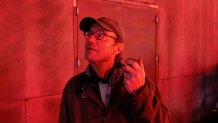
NBC New York
NBC New York Treb Heining preparing to give the cue to release the confetti in Times Square on New Year’s Eve.
The confetti process might be very similar, but each year creates a different memory for Heining.
“You ask some of your friends, ‘Hey, what did you do last New Year’s?’ And they won’t remember,” he said. “But I can tell you exactly where I was every New Year’s Eve, and I hope to continue doing it for many more years.”
His favorite year so far was when the calendar flipped from 1999 to 2000, and the new millennium was celebrated in Times Square every hour from 6 a.m. in the morning to 6 a.m. the following morning as the New Year began around the world. There was pink confetti for Japan, silver confetti for London and so on.
“There was a special effect for every country as they celebrated New Year’s,” Heining said. “I’ll never forget it. It was just a really, really spectacular year.”
Last year, Heining’s crew at his location dropped all green confetti, the favorite color of his friend Tommy DeLorenzo, who died in October 2024.
“We started with the one building in honor of him, and it was really special,” Heining said. “We had never done anything like that before.”
This year will include a post-midnight drop of 2,000 pounds of red, white and blue confetti at 12:04 a.m. to celebrate the nation’s upcoming 250th anniversary of the Declaration of Independence signing.
“We’ll be doing something a little new this year that’s never been done before,” Heining said.
But just before midnight, Heining will do exactly as he’s done for the last 33 years.
As the clock ticks down, the ball descends, and the world watches, he will once again raise his radio….
“Go confetti! Go confetti! Go confetti!”